

My Favorite Corned Beef and Cabbage
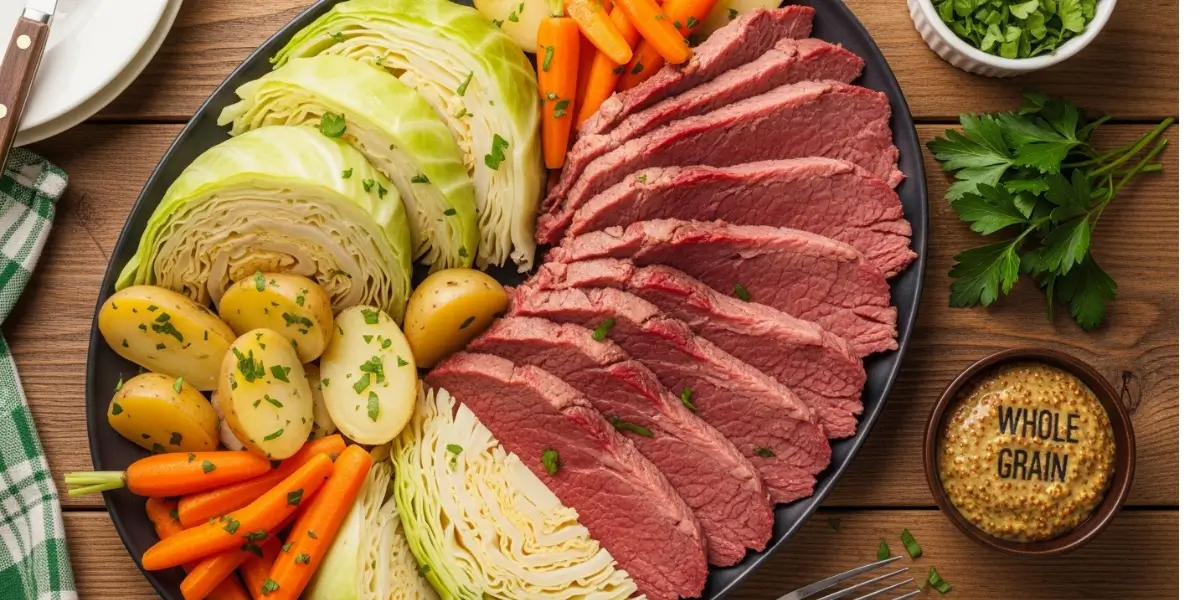
There’s a moment that takes me right back to childhood every single time — the kitchen clouded with steam, the windows fogged up, and that unmistakable savory-sweet aroma filling every corner of the house. My grandmother would stand at the stove, peeking under the lid of her enormous stockpot, and say the same thing every time: “You can’t rush corned beef and cabbage.” She was right. This wasn’t just a meal in our family. It was a ritual, a gathering point, a reason to slow down when the world wanted us to speed up.
Whether you grew up eating corned beef and cabbage every March or you’ve never made it before, this guide is for you. We’re going to walk through everything — the history, the technique, the tips that separate a good batch from a legendary one. By the time you finish reading, you’ll have every tool you need to create a dinner that fills your home with warmth and your table with people who keep coming back for seconds.

corned beef and cabbage recipe
Ingredients
Method
- Remove the corned beef brisket from packaging and rinse thoroughly under cold water to remove excess salt. Pat dry with paper towels.
- Place the corned beef in a large Dutch oven or stockpot, fat side up. Add the contents of the spice packet, garlic cloves, onion quarters, bay leaves, and peppercorns if using.
- Pour in enough cold water or beef broth to cover the meat by at least 1 inch.
- Bring the liquid to a boil over high heat, then immediately reduce heat to low to maintain a gentle simmer. Cover the pot with a lid.
- Simmer the corned beef gently for approximately 2 hours and 45 minutes (about 50 minutes per pound), checking occasionally to ensure the meat remains submerged.
- After 2 hours and 45 minutes, add the potato halves and carrot pieces to the pot. Continue simmering for 20 minutes.
- Add the cabbage wedges to the pot, pressing them gently into the liquid. Cover and simmer for an additional 15-20 minutes until the cabbage is tender and the potatoes are easily pierced with a fork.
- Check the corned beef for doneness by inserting a fork into the thickest part—it should slide in easily and the meat should feel very tender. Internal temperature should reach at least 145°F.
- Remove the pot from heat. Transfer the corned beef to a cutting board and let it rest for 10-15 minutes.
- While the meat rests, use a slotted spoon to transfer the vegetables to a serving platter. Cover with foil to keep warm.
- Slice the corned beef against the grain into 1/4-inch thick slices. Cutting against the grain is crucial for tender bites.
- Arrange the sliced corned beef on the platter with the vegetables. Garnish with fresh chopped parsley.
- Serve immediately with whole grain mustard, horseradish sauce, and crusty bread. Ladle some of the cooking liquid over the meat and vegetables if desired for extra moisture and flavor.
The Rich History Behind Corned Beef And Cabbage
How an Irish American Tradition Was Born
Here’s a fact that surprises most people: corned beef and cabbage isn’t actually a traditional Irish dish — at least, not in the way we think of it. In Ireland, the centerpiece of a boiled dinner was more likely salt pork or bacon. When Irish immigrants arrived in the United States in the 19th century, particularly in cities like New York and Boston, they discovered that beef brisket was far more affordable than pork. Jewish delicatessens in lower Manhattan sold corned beef at prices working families could manage, and a new tradition was born.
The “corned” in corned beef refers to the large grains — or “corns” — of salt used to cure the brisket. This salt-curing process, combined with pickling spices like mustard seeds, allspice, and coriander, transforms a tough cut of meat into something deeply flavorful and fork-tender when cooked low and slow. Cabbage, a cheap and plentiful vegetable on both sides of the Atlantic, became the natural partner.
Why Corned Beef And Cabbage Endure as a Comfort Food Classic
Fast forward to today, and corned beef and cabbage has become one of the most beloved comfort meals in American cooking. It peaks in popularity around St. Patrick’s Day every March, but devoted fans cook it year-round. And for good reason — it’s a one-pot meal that feeds a crowd, requires minimal hands-on effort, and rewards patience with extraordinary flavor.
What makes this dish endure isn’t complexity. It’s honesty. There are no fancy sauces or molecular gastronomy tricks here. Just quality ingredients, a slow simmer, and time. The brisket releases collagen as it cooks, creating a silky, rich broth that infuses every vegetable in the pot. The carrots turn sweet. The potatoes absorb the spiced liquid. And the cabbage — often the unsung hero — softens into something buttery and completely addictive.

How to Cook Corned Beef And Cabbage Perfectly Every Time
Choosing the Right Cut and Essential Ingredients
Your corned beef and cabbage dinner is only as good as the brisket you start with. You’ll find two cuts at most grocery stores: the flat cut and the point cut.
| Cut | Characteristics | Best For |
|---|---|---|
| Flat Cut | Leaner, uniform thickness, slices neatly | Clean presentation, sandwiches, family dinners |
| Point Cut | More marbling and fat, richer flavor, less uniform | Maximum tenderness and flavor, pulled/shredded style |
For a classic plated corned beef and cabbage dinner, the flat cut is the go-to choice. It slices beautifully against the grain and looks stunning on a platter. But if you prioritize flavor and tenderness above all else, the point cut is incredibly forgiving and practically melts apart.
Most packaged corned beef briskets come with a small spice packet. Use it — but don’t stop there. Boosting the braising liquid with extra bay leaves, smashed garlic, black peppercorns, and even a bottle of dark stout beer adds layers of complexity that elevate the entire dish.
As for vegetables, keep it traditional and simple:
- Green cabbage — cut into thick wedges so it holds together during cooking
- Small red potatoes — halved, waxy enough to stay intact
- Carrots — peeled and cut into generous chunks
- Yellow onion — quartered, for aromatic depth

Step-by-Step Cooking Method for Tender, Flavorful Results
The secret to outstanding corned beef and cabbage comes down to three non-negotiable principles: rinse the brisket, keep the simmer low, and add vegetables at the right time.
Step 1: Rinse the brisket. This might seem minor, but it matters enormously. Corned beef is packed in a heavy brine, and skipping the rinse means an overly salty finished product. Hold it under cold running water for a full minute, turning it over several times.
Step 2: Submerge and simmer. Place the brisket fat-side up in a large Dutch oven. Add your aromatics and enough cold water (plus beer, if using) to cover the meat by an inch. Bring it to a boil, then immediately reduce to the gentlest simmer you can manage. A rolling boil toughens the meat. A lazy bubble transforms it. Cover and cook for roughly 50 minutes per pound — a 4-pound brisket needs about 2.5 to 3 hours.
Step 3: Stage the vegetables. This is where many cooks go wrong. If you add everything at the beginning, you’ll end up with mushy, disintegrating vegetables. Instead, add the potatoes and carrots during the last 30 minutes, and the cabbage wedges during the final 15 minutes. Everything finishes perfectly together.
Step 4: Rest and slice. Remove the brisket and let it rest for 10 full minutes. This allows the juices to redistribute. Then slice against the grain — look for the lines running across the surface of the meat and cut perpendicular to them. This single step is the difference between tender slices and chewy, stringy ones.
| Cooking Method | Time Estimate | Best For |
|---|---|---|
| Stovetop (Dutch Oven) | 3–3.5 hours | Classic method, best flavor control |
| Slow Cooker (Low) | 8–10 hours | Hands-off convenience |
| Instant Pot | 90 minutes + natural release | Weeknight speed |
| Oven Braised (300°F) | 3.5–4 hours | Even heat, great for large briskets |
Expert Tips, Variations, and Serving Ideas for Corned Beef And Cabbage
Pro Tips That Take Your Corned Beef And Cabbage from Good to Great
After years of making this dish and learning from every batch, here are the tips that make the biggest difference:
- Don’t throw away the cooking liquid. That broth is liquid gold. Use it to reheat leftovers, cook additional vegetables the next day, or as the base for a hearty soup.
- Glaze the brisket for a finishing touch. After simmering, you can transfer the brisket to a baking sheet, brush it with a mixture of whole grain mustard, brown sugar, and a splash of the cooking liquid, and broil it for 3–4 minutes. The caramelized crust adds a whole new dimension to your corned beef and cabbage dinner.
- Go low on the simmer, always. This cannot be stressed enough. Brisket is full of tough connective tissue that only breaks down with gentle, prolonged heat. High heat contracts the muscle fibers and squeezes out moisture, leaving you with dry, chewy meat.
- Season carefully. Because the brisket is already cured in salt, you rarely need to add extra salt to the cooking liquid. Taste the broth before seasoning the vegetables — you may only need pepper.

Creative Leftover Ideas and Serving Suggestions
One of the best things about corned beef and cabbage is that it might be even better the next day. Leftover corned beef is extraordinarily versatile:
- Corned Beef Hash: Dice the leftover meat and potatoes, fry them in a skillet until crispy, and top with a runny fried egg. This is arguably one of the greatest breakfasts ever invented.
- Reuben Sandwiches: Pile sliced corned beef on rye bread with Swiss cheese, sauerkraut, and Thousand Island dressing, then grill until golden.
- Corned Beef Fried Rice: An unexpected fusion that works beautifully — diced corned beef with day-old rice, soy sauce, eggs, and scallions.
For serving the main event, set out a bowl of whole grain mustard, some crusty bread for soaking up the broth, and — if you want to be generous — a side of horseradish cream. A pint of Irish stout or a glass of hard cider pairs perfectly.
Frequently Asked Questions About Corned Beef And Cabbage
Q: How long does it take to cook corned beef and cabbage on the stovetop?
A: Plan for approximately 50 minutes per pound of brisket at a low simmer, plus an additional 30 minutes for the vegetables. A standard 4-pound corned beef and cabbage dinner takes roughly 3 to 3.5 hours total from start to finish on the stovetop.
Q: Should I rinse corned beef before cooking it, and cabbage?
A: Absolutely. Rinsing the brisket under cold running water for at least a minute removes excess surface salt from the brine. This step is essential for balanced seasoning in your finished corned beef and cabbage. Without rinsing, the dish can taste overwhelmingly salty.
Q: Can I make corned beef and cabbage in a slow cooker?
A: Yes, and it’s one of the most popular methods. Place the rinsed brisket in the slow cooker with the spice packet and aromatics, cover with water, and cook on low for 8–10 hours. Add cabbage, potatoes, and carrots during the last 2–3 hours. Slow-cooker corned beef and cabbage is incredibly tender and completely hands-off.
Q: What’s the best way to slice corned beef and cabbage for serving?
A: Always slice the corned beef against the grain. Look at the top of the brisket and identify the direction of the muscle fibers, then cut perpendicular to those lines in quarter-inch slices. This technique ensures each piece of your corned beef and cabbage is tender rather than stringy.
Q: Is corned beef and cabbage actually Irish?
A: The dish as we know it today is Irish American rather than traditionally Irish. Irish immigrants in the United States adapted their boiled dinner traditions by substituting affordable corned beef brisket for the salt pork or bacon they ate back home. Today, corned beef and cabbage are celebrated as a beloved staple of both Irish American culture and St. Patrick’s Day.
Conclusion: Your Table Deserves This Meal
There’s something beautifully simple about corned beef and cabbage. It doesn’t demand culinary school training or exotic ingredients. It asks for patience, good-quality brisket, and the willingness to let time do the heavy lifting. What you get in return is a meal that fills stomachs, sparks conversations, and creates the kind of memories that linger long after the plates are cleared.
Whether you’re cooking for St. Patrick’s Day, feeding a crowd on a Sunday afternoon, or just craving something deeply comforting on a cold evening, corned beef and cabbage delivers every single time. The tender slices of spiced brisket, the vegetables soaked in that incredible broth, the whole house smelling like something wonderful is happening — it’s a gift you give to yourself and everyone around your table.
So pick up a brisket this week. Pull out your biggest pot. And make this dish your own. You won’t regret it.
Try this recipe tonight and let us know how it turns out — share your photos, tips, and family traditions in the comments below!


