

Simple Beef Ribs Recipe Tender, Juicy, and Fall

There’s a moment — right when you pull a rack of perfectly cooked beef ribs recipe from the oven or smoker — when the aroma fills every corner of your kitchen, and you know something extraordinary just happened. The bark glistens. The meat trembles as you lift it. And when you take that first bite, the beef practically dissolves on your tongue, rich and smoky and impossibly tender. That moment? It’s what separates a good meal from an unforgettable one.
If you’ve been searching for the perfect beef ribs recipe that delivers that kind of experience every single time, you’ve just found it. Whether you’re a complete beginner who’s never touched a rack of ribs or a seasoned weekend griller looking to elevate your game, this guide walks you through everything — from choosing the right cut to nailing the seasoning, and finally mastering two foolproof cooking methods that produce restaurant-quality results at home.
Let’s get into it.
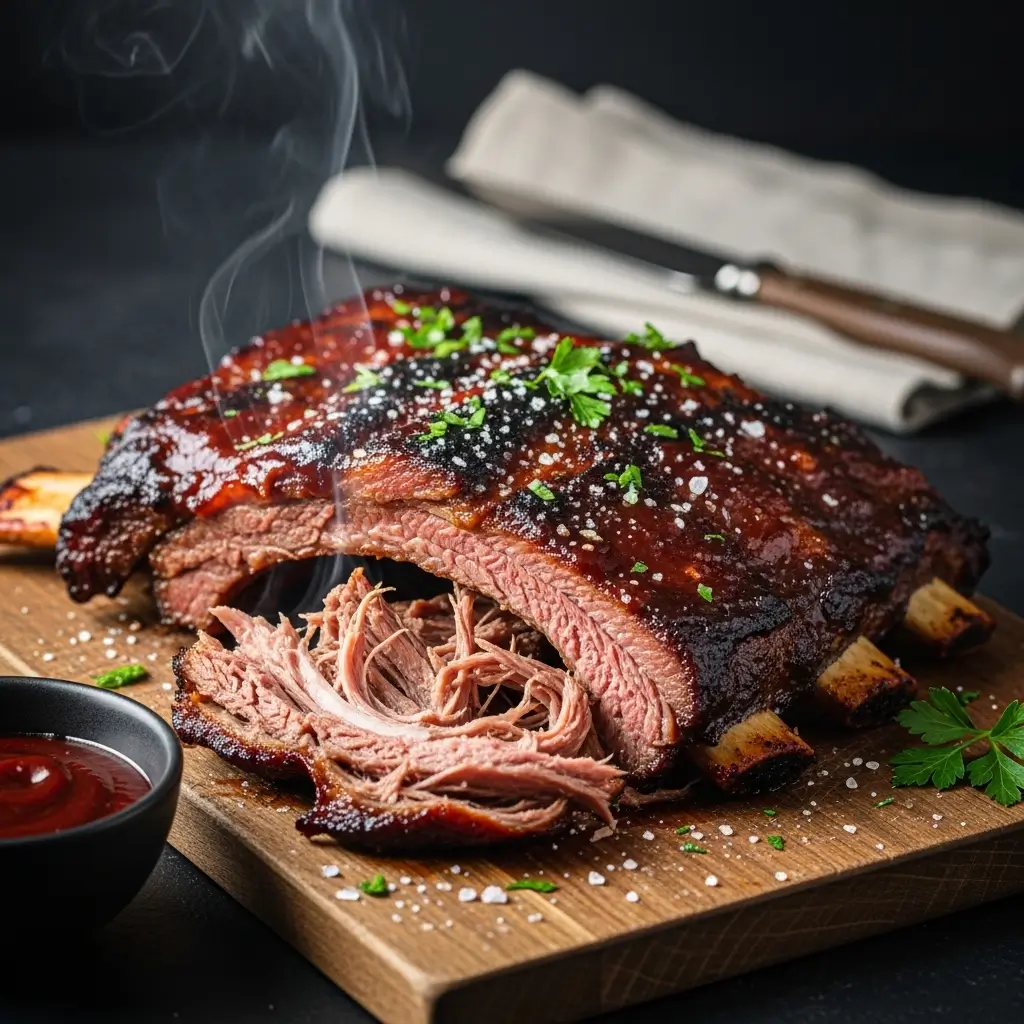

Beef Ribs Recipe: Tender, Juicy, and Fall
Ingredients
Method
- Remove the thin silverskin membrane from the bone side of the ribs
- Trim any thick external fat down to approximately ¼ inch
- Combine all dry rub ingredients in a bowl and mix thoroughly
- Coat every surface of the ribs generously with the dry rub
- Rest seasoned ribs uncovered in the refrigerator for a minimum of 2 hours, ideally 8-12 hours
- Remove ribs from the refrigerator and let come to room temperature 45 minutes before cooking
- Cook low and slow at 250°F – 285°F using your choice of oven or smoker
- Continue cooking until the internal temperature of the meat reaches 203°F and a thermometer probe slides into the meat with no resistance
- Rest the ribs for a minimum of 15 minutes before slicing and serving
Choosing the Right Cut for Your Beef Ribs Recipe
Before you fire up the oven or smoker, there’s a critical first step that many home cooks overlook: picking the right cut of beef ribs. Not all ribs are created equal, and your choice of cut will dramatically affect the flavor, texture, and cooking time of your final dish. A great beef ribs recipe starts long before you season the meat — it starts at the butcher counter.
Beef Short Ribs vs. Beef Back Ribs recipe — Which One Should You Pick?
When you walk into a grocery store or butcher shop, you’ll typically encounter two main types of beef ribs. Understanding the difference between them is the foundation of a successful cook.
Beef Short Ribs come from the lower portion of the rib cage and the plate section. They’re known for their thick, meaty layers of beef sitting on top of the bone, with generous marbling running throughout. This intramuscular fat is what makes short ribs so incredibly rich and tender when cooked low and slow. Within the short rib category, you’ll find two popular styles:
- Plate ribs (also called “dino ribs”): These are the massive, show-stopping ribs you see on competition BBQ circuits. Each bone can carry a half-pound or more of meat. They’re ideal for smoking.
- Chuck short ribs: Cut from the chuck area, these are smaller but still packed with beefy flavor. They’re wonderful for braising or oven-roasting.
Beef Back Ribs are cut from the upper rib section, near the prime rib or ribeye area. After the butcher removes the ribeye roast, the remaining meat clinging to the curved rib bones becomes back ribs. They’re leaner and have less meat per bone compared to short ribs, but they cook faster and still deliver satisfying flavor — especially with the right dry rub.

Here’s a quick comparison to help you decide:
| Feature | Beef Short Ribs | Beef Back Ribs |
|---|---|---|
| Location on Cow | Lower rib cage / plate | Upper rib cage (near ribeye) |
| Meat Amount | Very thick and meaty | Thinner layer of meat |
| Fat Content | High marbling | Leaner |
| Best Cooking Method | Smoking, braising, slow oven | Grilling, oven-roasting |
| Cooking Time | 6–10 hours (smoked) / 3–4 hours (braised) | 2–3 hours (oven) / 1.5–2 hours (grill) |
| Flavor Profile | Intensely rich, buttery | Beefy, slightly lighter |
| Difficulty Level | Moderate | Beginner-friendly |
The bottom line: If you want dramatic, melt-in-your-mouth beef ribs with maximum wow factor, go with short ribs — especially plate ribs. If you’re looking for a quicker, easier cook that’s still delicious, beef back ribs are your friend.
What to Look for at the Butcher Counter
Once you know which cut you want, here’s how to select the best rack:
- Look for marbling. Thin white streaks of fat running through the meat indicate flavor and tenderness. Avoid cuts that appear uniformly lean or have large external fat deposits without internal marbling.
- Check the meat-to-bone ratio. You want ribs where the meat sits thick and full on the bones. If the bones are largely exposed with barely any meat — a condition BBQ enthusiasts call “shiners” — the butcher cut too close. Ask for a meatier rack.
- Choose USDA Choice or Prime. These grades indicate better marbling. Select grade ribs will work, but won’t deliver the same richness.
- Fresh over frozen when possible. Fresh ribs have a better texture. If buying frozen, thaw them slowly in the refrigerator for 24–48 hours before cooking.
- Don’t be afraid to talk to your butcher. Ask for a full plate of untrimmed beef short ribs or a rack of back ribs with good meat coverage. A good butcher will cut them to your specifications.
Selecting high-quality meat is the single most important step you can take to ensure your beef ribs turn out incredible.
How to Season and Prepare Beef Ribs recipe Like a Pitmaster
With the right cut in hand, the next phase is all about building layers of flavor. The beauty of a truly great beef ribs recipe is that it doesn’t require a complicated marinade or a pantry full of exotic spices. Beef ribs have such a deep, natural flavor that a well-balanced dry rub and proper preparation are all you need.
The Perfect Homemade Dry Rub for Beef Ribs recipe

A great dry rub enhances the natural beefiness without masking it. This is the rub I use, and it’s become my go-to for every beef ribs recipe I prepare — whether I’m smoking, braising, or oven-roasting.
| Ingredient | Amount | Purpose |
|---|---|---|
| Kosher salt | 2 tablespoons | Seasoning foundation; draws out moisture for bark |
| Coarse black pepper | 2 tablespoons | Heat and classic BBQ flavor |
| Garlic powder | 1 tablespoon | Savory depth |
| Onion powder | 1 tablespoon | Sweetness and umami |
| Smoked paprika | 1 tablespoon | Color, smokiness, mild heat |
| Brown sugar | 1 tablespoon | Caramelization and balance |
| Cumin | 1 teaspoon | Earthy warmth |
| Cayenne pepper | ½ teaspoon (optional) | Extra kick for heat lovers |
| Dried thyme | 1 teaspoon | Herbal complexity |
Instructions: Combine all ingredients in a bowl and mix thoroughly. This makes enough rub for one full rack of beef ribs (approximately 3–4 pounds). Store leftover rub in an airtight container for up to three months.
Pro tip: Many championship pitmasters in Texas keep it simple — just a 50/50 blend of coarse salt and black pepper (known as a “Dalmatian rub”). If you want to let the quality of the beef shine through without distraction, that minimalist approach works beautifully, too. A simple rub on premium meat is one of the secrets behind every iconic Texas-style beef ribs recipe.
Marinating, Trimming, and Prepping Tips for Maximum Flavor
Before you apply the rub, take a few minutes to properly prepare your ribs. This prep work makes a noticeable difference in the final result.
1. Remove the membrane. On the bone side of the ribs, you’ll find a thin, translucent membrane (called the peritoneum). Slide a butter knife under it at one end, grip it with a paper towel for traction, and peel it off in one smooth motion. Removing this membrane allows the rub to penetrate the meat and prevents a chewy, unpleasant texture.
2. Trim excess fat. While marbling is desirable, large external fat caps won’t render properly during cooking. Trim any thick slabs of surface fat down to about ¼ inch. This ensures even cooking and helps the bark form correctly.
3. Apply the rub generously. Coat every surface of the ribs — top, bottom, sides, and between the bones. Don’t be shy. Press the rub into the meat with your hands so it adheres properly.
4. Let the ribs rest after seasoning. For the best results, apply the rub and let the ribs sit uncovered in the refrigerator for at least 2 hours — or ideally overnight (8–12 hours). This process, sometimes called a “dry brine,” allows the salt to penetrate deep into the meat, seasoning it from the inside out while the surface dries slightly, promoting a better bark during cooking.
5. Bring to room temperature before cooking. Remove the ribs from the fridge 45–60 minutes before cooking. Cold meat going into a hot oven or smoker will cook unevenly. Letting it temper ensures consistent results.
These preparation steps are non-negotiable in every great beef ribs recipe. They take minimal effort but deliver maximum payoff.
Cooking Methods for the Best Beef Ribs Recipe
Now for the main event — cooking your beef ribs to perfection. Below, I’m sharing two tried-and-tested methods: one for the oven (ideal for beginners and anyone without outdoor equipment) and one for the smoker (for BBQ enthusiasts chasing that authentic smoke ring and bark). Both produce extraordinary results.
Oven-Baked Beef Ribs recipe — Perfect for Beginners
You absolutely do not need a smoker to make a stunning beef ribs recipe. Your home oven is a powerful tool for low-and-slow cooking, and this method produces incredibly tender, fall-off-the-bone ribs with minimal fuss.
What you’ll need:
- 1 rack of seasoned beef ribs (short ribs or back ribs)
- Heavy-duty aluminum foil or a Dutch oven with a lid
- A wire rack set inside a rimmed baking sheet
- Meat thermometer
- Optional: beef broth (½ cup) for braising
Step-by-step instructions:
Step 1: Preheat your oven to 285°F (140°C). Low and slow is the mantra. This temperature allows collagen in the connective tissue to break down gradually, transforming tough meat into something silky and tender.
Step 2: Place your seasoned ribs bone-side down on the wire rack over the baking sheet. If you prefer a braised approach, place the ribs in a Dutch oven, add ½ cup of beef broth, and cover tightly with the lid.
Step 3: Cover the baking sheet tightly with aluminum foil, creating a sealed environment that traps moisture. This mimics the effect of a smoker’s closed chamber.
Step 4: Cook for 3 to 4 hours for back ribs or 5 to 6 hours for short ribs. The ribs are done when the internal temperature reaches 203°F (95°C) — measured in the thickest part of the meat, not touching bone. At this temperature, the collagen has fully rendered, and the meat will be impossibly tender.
Step 5: For a caramelized finish, remove the foil during the last 30 minutes of cooking. Optionally, brush on your favorite barbecue sauce and increase the oven temperature to 350°F (175°C) to create a sticky, glazed exterior.
Step 6: Let the ribs rest for 15–20 minutes before slicing. This allows the juices to redistribute throughout the meat. Cutting too soon means those precious juices end up on your cutting board instead of in your mouth.
This oven-baked beef ribs recipe is virtually foolproof. As long as you maintain a low temperature and cook to the right internal temp, you’ll get phenomenal results every time.
Smoked Beef Ribs recipe — For True BBQ Enthusiasts
If you own a smoker — whether it’s an offset, a pellet grill, a kamado, or even a kettle-style charcoal grill set up for indirect cooking — smoking beef ribs is one of the most rewarding things you can do in outdoor cooking. The combination of wood smoke, rendered fat, and a crusty, peppery bark creates something almost transcendent.
This smoked beef ribs recipe is modeled after the iconic style served at legendary Texas barbecue joints, and it’s simpler than you might think.
What you’ll need:
- 1 rack of beef plate ribs or short ribs (3-bone section, approximately 4–6 pounds)
- Your dry rub (applied the night before)
- Smoking wood: post oak is traditional; hickory, mesquite, or cherry also work well
- Spray bottle filled with a 50/50 mix of apple cider vinegar and water
- Pink butcher paper (unwaxed)
- Meat thermometer (preferably a leave-in probe)
Step-by-step instructions:
Step 1: Set up your smoker for indirect cooking at 250°F–275°F (120°C–135°C). Add your wood chunks or splits. For beef ribs, post oak provides a clean, smoky flavor that doesn’t overpower the beef — it’s the gold standard in Central Texas barbecue.
Step 2: Place the ribs bone-side down on the grate, fat cap facing up. Close the lid and resist the urge to peek constantly. Every time you open the smoker, you lose heat and smoke.
Step 3: After the first 2 hours, begin spritzing the ribs with your vinegar-water mixture every 45 minutes to an hour. This keeps the surface moist, prevents the bark from becoming too thick, and helps smoke adhere to the meat.
Step 4: When the internal temperature hits around 165°F–170°F (74°C–77°C) — typically after 5–6 hours — the ribs will “stall.” This is when evaporative cooling slows the temperature rise. At this point, wrap the ribs in pink butcher paper. The paper allows the ribs to continue absorbing smoke while protecting them from drying out. (Aluminum foil works too, but butcher paper preserves the bark better.)
Step 5: Return the wrapped ribs to the smoker and continue cooking until the internal temperature reaches 203°F (95°C) and the meat feels probe-tender — meaning a thermometer probe slides into the meat with zero resistance, like pushing into warm butter. Total cook time is typically 8 to 10 hours for plate ribs.
Step 6: Rest the wrapped ribs in a cooler (no ice) for at least 1 hour, up to 4 hours. This extended rest allows the juices to fully reabsorb and the collagen to set. Competition pitmasters consider this step just as important as the cook itself.
Here’s a quick comparison of both cooking methods:
| Factor | Oven-Baked Method | Smoked Method |
|---|---|---|
| Equipment Needed | Oven, baking sheet, foil | Smoker, wood, butcher paper |
| Temperature | 285°F | 250°F–275°F |
| Total Cook Time | 3–6 hours | 8–10 hours |
| Flavor Profile | Tender, beefy, rich | Smoky, crusty bark, deeply complex |
| Difficulty | Easy — great for beginners | Moderate — requires fire management |
| Best For | Weeknight meals, apartment cooking | Weekend cookouts, special occasions |
No matter which method you choose, the core principles of a great beef ribs recipe remain the same: quality meat, proper seasoning, low-and-slow cooking, and patience.
Conclusion: Your Perfect Beef Ribs Are Waiting
Let’s recap what you’ve learned. A truly outstanding beef ribs recipe comes down to three pillars:
- Choose the right cut. Beef short ribs deliver rich, heavily marbled meat that’s perfect for smoking or braising. Beef back ribs are leaner and quicker to cook — great for oven roasting or grilling.
- Season with intention. A balanced dry rub applied the night before transforms the flavor from good to extraordinary. Let salt do its work through a dry brine, and don’t skip removing the membrane.
- Cook low and slow at the right temperature. Whether you use your oven at 285°F or a smoker at 250°F, the target internal temperature is 203°F with probe tenderness. This is where collagen converts to gelatin and tough meat becomes meltingly tender.
Beef ribs are one of the most impressive and satisfying things you can cook at home. They look dramatic on a platter, they taste incredible, and they’re far more forgiving than most people realize. Once you nail this beef ribs recipe, it will become a permanent part of your rotation — the dish that everyone requests and nobody forgets.
Now it’s your turn. Fire up that oven or smoker, grab a beautiful rack of ribs from your butcher, and put this guide to work. And when those ribs come out glistening, tender, and absolutely perfect — snap a photo and share your results in the comments below. I’d love to see what you create.
FAQ: Beef Ribs Recipe
Q: How long does it take to cook a beef ribs recipe in the oven?
A: Oven-baked beef ribs typically take 3 to 6 hours, depending on the cut. Beef back ribs cook in approximately 3 hours at 285°F, while thick beef short ribs may need 5 to 6 hours at the same temperature. The key indicator of doneness isn’t time — it’s an internal temperature of 203°F and probe tenderness, where the meat offers no resistance to a thermometer probe.
Q: What is the best wood to use for a smoked beef ribs recipe?
A: Post oak is the classic choice for smoked beef ribs and is used by most legendary Texas barbecue pitmasters. It provides a clean, medium-intensity smoke flavor that complements beef without overwhelming it. Hickory is another excellent option that adds a slightly stronger, nuttier smokiness. Cherry wood gives a milder, subtly sweet smoke. Avoid softwoods like pine or cedar, which produce harsh, resinous flavors.
Q: Can I make a beef ribs recipe ahead of time for a party?
A: Absolutely. Beef ribs actually reheat beautifully, making them an ideal make-ahead dish. Cook your ribs fully, let them cool, wrap them tightly in foil, and refrigerate for up to 3 days. To reheat, place the foil-wrapped ribs in a 275°F oven for 30–45 minutes until warmed through. The low reheating temperature preserves the tender texture. Many BBQ competition teams cook their ribs the day before an event for this exact reason — the flavors continue to develop during refrigeration.
Q: What sides go best with a beef ribs recipe?
A: Beef ribs are rich and intensely flavored, so they pair best with sides that offer contrast. Classic choices include creamy coleslaw, tangy pickles, cornbread, baked beans, mac and cheese, roasted vegetables, or a simple vinegar-based potato salad. A bright, acidic side — like a citrus slaw or pickled red onions — cuts through the richness of the meat and keeps every bite feeling fresh.


