

Irish Soda Bread Recipe
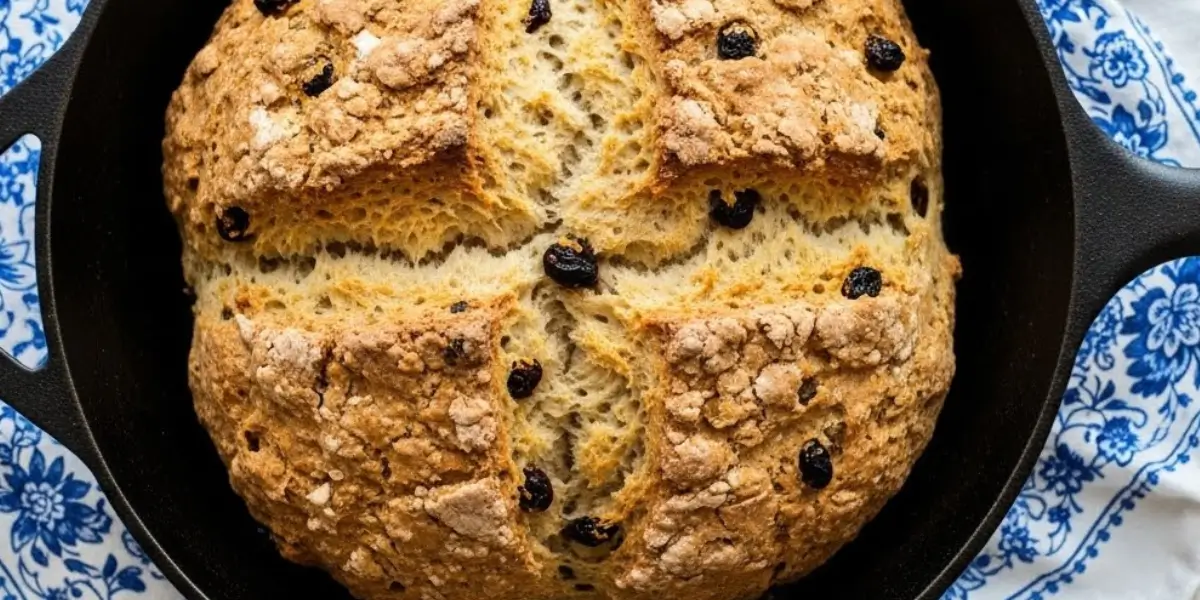
Is there anything more comforting than the smell of fresh bread wafting through your kitchen? For many of us, the idea of baking bread is intimidating. We imagine hours of kneading, proofing yeast, and waiting for dough to rise, only to worry that it might collapse in the oven. But what if I told you that you could have a steaming, crusty loaf of artisan-style bread on your table in under an hour, with no yeast and no kneading required?
Welcome to the world of traditional Irish baking. Whether you are prepping for St. Patrick’s Day or simply craving a warm slice of comfort slathered in salted butter, this Irish soda bread recipe is about to become a staple in your culinary repertoire. It is humble, hearty, and incredibly forgiving.
In this guide, you will learn not just how to mix flour and milk, but the history, science, and secrets to perfecting this classic loaf. Let’s preheat the oven and get started.

Irish Soda Bread Recipe
Ingredients
Method
- Preheat oven to 425°F (220°C).
- In a large bowl, combine flour, baking soda, and salt.
- Make a well in the center of the dry ingredients and pour in the buttermilk.
- Using a wooden spoon or your hand, mix until a shaggy dough forms.
- Turn dough onto a lightly floured surface and knead gently for about 2-3 minutes until just combined (do not overwork).
- Shape dough into a round loaf and place on a greased baking sheet.
- Cut an X shape about ¼ inch deep across the top of the loaf.
- Bake for 40-45 minutes until golden brown and the loaf sounds hollow when tapped on the bottom.
- Cool on a wire rack before slicing.
Understanding the Heritage Behind Your Irish Soda Bread Recipe
To bake a truly great loaf, it’s helpful to understand its origins. Unlike brioche or sourdough, which require patience and complex biology, this Irish soda bread recipe is born out of necessity and chemistry.
The Science of Soda and Buttermilk
The magic of this bread lies in the interaction between two key ingredients: baking soda (sodium bicarbonate) and buttermilk. When you combine the base (soda) with the acid (buttermilk), a chemical reaction occurs instantly. This releases carbon dioxide bubbles, which get trapped in the gluten structure of the flour, causing the bread to rise.
Because this reaction happens the moment the liquid hits the dry ingredients, speed is of the essence. This is why it is called a “quick bread.” You don’t wait for yeast to ferment; you mix and bake immediately. Understanding this chemical dance is the first step to mastering your Irish soda bread recipe.

A History of Necessity
While we associate this bread with Ireland, the chemical leavening agent (bicarbonate of soda) was actually introduced to the country in the 1840s. During the years of the Great Famine, yeast was scarce and expensive, and the wheat grown in Ireland was a “soft” variety that didn’t work well with yeast. However, “soft” wheat is perfect for soda bread.
Families needed a cheap, reliable way to put food on the table. They used simple, accessible ingredients—flour, salt, sour milk, and soda—to create a dense, nutritious loaf cooked in cast iron pots over open turf fires. When you bake this Irish soda bread recipe, you are participating in a tradition of resilience and survival that spans nearly two centuries.
Essential Ingredients for the Perfect Loaf
The beauty of this Irish soda bread recipe lies in its minimalism. You do not need a pantry full of exotic items. However, because the list is so short, the quality of your ingredients matters significantly.
Choosing Your Flour
Traditionally, Irish soda bread uses a mix of whole wheat flour and white flour. This provides a rustic texture and a nutty flavor.
- Pastry or Cake Flour: If you want to replicate the soft wheat of Ireland, you can substitute a portion of your all-purpose flour with cake flour (though all-purpose works just fine for a standard loaf).
- Whole Wheat: This adds density and fiber. A 50/50 split between white and whole wheat is standard for “Brown Soda Bread.”
The Great Debate: Raisins and Caraway
If you ask an American about soda bread, they will likely describe a sweet, scone-like loaf filled with currants and caraway seeds. If you ask an Irish purist, they might scoff.
- Traditional: Flour, salt, soda, buttermilk. That’s it.
- “Spotted Dog”: This is the playful name for soda bread that includes raisins, currants, or sugar. It was traditionally a treat for harvest time or Sundays.
You can customize this Irish soda bread recipe however you like, but know that the plain version is the most authentic daily bread of the Emerald Isle.

Ingredient Role Table
| Ingredient | Role in the Recipe | Substitute |
|---|---|---|
| Flour | Provides structure (gluten) | All-purpose or Whole Wheat mix |
| Baking Soda | The leavening agent (Base) | None (Baking powder is not the same) |
| Buttermilk | Reacts with soda (Acid) & tenderizes | Milk + Lemon Juice / Vinegar |
| Salt | Flavor enhancer | Sea salt or Kosher salt |
| Cold Butter | Adds richness (Optional) | Can be omitted for lean bread |
Step-by-Step Guide to Mastering This Irish Soda Bread Recipe
Now that you have your ingredients, it is time to get your hands dirty. The technique for this Irish soda bread recipe is distinctly different from yeast breads. The goal is to handle the dough as little as possible.
The “Claw” Technique
Over-kneading is the enemy of soda bread. If you work the dough too much, you develop too much gluten, resulting in a rock-hard loaf known as a “stone.”
- Form a Claw: Use your hand like a rigid claw.
- Gently Mix: Stir the buttermilk into the flour in a circular motion.
- Stop Early: Stop mixing the moment the flour is moistened. The dough should look shaggy, rough, and slightly sticky. It should not be smooth like pizza dough.
The Tradition of the Cross
You will notice that almost every Irish soda bread recipe instructs you to cut a deep ‘X’ or cross into the top of the loaf before baking. While folklore says this is to “let the fairies out” (or to keep the devil out of the bread), there is a practical reason for this geometry.
Soda bread is dense. Without the cross, the outside would burn before the center is fully cooked. The deep cuts allow heat to penetrate the thickest part of the loaf, ensuring an even bake. It also allows the bread to expand (“spring”) without cracking the sides.
Customizations and Serving Suggestions
Once you have mastered the basic Irish soda bread recipe, you can start experimenting.
- Savory Twist: Add cheddar cheese, chopped chives, or rosemary to the dry mix for a savory version that pairs perfectly with tomato soup.
- Breakfast Toast: The “Spotted Dog” version with raisins is heavenly when toasted and topped with orange marmalade.
- The Classic Way: Serve it warm, sliced thick, with a generous slab of high-quality salted butter (like Kerrygold) and perhaps a drizzle of honey.

Common Mistakes to Avoid When Baking
Even though this is a simple bread, things can go wrong. Here is how to troubleshoot your Irish soda bread recipe to ensure success every time.
- Old Baking Soda: If your baking soda has been sitting in the pantry for two years, it may have lost its potency. Test it by dropping a pinch in vinegar; if it fizzes violently, it’s good. If not, buy a fresh box.
- Oven Not Ready: Remember, the chemical reaction happens immediately. If your oven isn’t fully preheated when you mix the wet and dry ingredients, the bubbles will fizzle out before the bread sets, leading to a flat loaf.
- Too Much Flour: Dough too sticky? Be careful adding extra flour. Just dust your hands. Adding too much flour during the shaping stage dries out the crumb.
Frequently Asked Questions (FAQ)
1. Can I make this Irish soda bread recipe if I don’t have buttermilk?
Yes, you can easily make a buttermilk substitute! Simply add one tablespoon of lemon juice or white vinegar to a cup of regular milk. Let it sit for about 5 to 10 minutes until it curdles slightly. This acidity is crucial for reacting with the baking soda, so do not skip this step if you want your Irish soda bread recipe to rise properly.
2. Why did my Irish soda bread recipe turn out too dense or heavy?
Density is usually caused by two things: over-mixing or old baking soda. If you knead the dough like yeast bread, you destroy the tender crumb. Mix only until the flour is moistened. Also, ensure your baking soda is fresh. If the soda is inactive, there won’t be enough aeration to lift the heavy flour, resulting in a brick-like texture in your Irish soda bread recipe.
3. How long does the bread from this Irish soda bread recipe stay fresh?
Because this bread contains no preservatives or yeast, it dries out faster than store-bought bread. It is best eaten the day it is baked. However, you can wrap it tightly in plastic wrap or store it in an airtight container at room temperature for 2–3 days. If it starts to go stale, this Irish soda bread recipe makes excellent toast or croutons.
Conclusion
Baking bread doesn’t have to be a scientific experiment that takes all weekend. By embracing the simplicity of this traditional Irish soda bread recipe, you are connecting with a history of resourcefulness and enjoying one of the world’s most satisfying comfort foods.
The next time you need a quick side for a stew, or you just want to fill your home with the scent of warm baking, remember this guide. It is foolproof, fast, and utterly delicious.
Have you tried this recipe? We would love to see your creations! Rate this recipe below, leave a comment about your favorite mix-ins (raisins or no raisins?), and share your photos on social media. Happy baking


